It seems that the war in the Middle East will drag on for days, perhaps even weeks, with no prospect of a near-term end. The possibility of new parties joining the conflict is also a concern, especially given the irresponsible attacks by the Iranian regime on new countries in the region: Turkey, Azerbaijan, and Lebanon.
These are all fronts that threaten to snowball, drawing in parties other than the US, Israel, and Iran. Such a shift, if it occurs, would threaten a highly dangerous regional war between Iran on one side and countries, some of which are NATO members, such as Turkey, on the other. Turkey has recently been targeted by Iranian ballistic missiles.
With this dangerous escalation, Egypt is cautiously observing, adhering to strategic patience, which is not without considerable anxiety should the war continue or new parties become involved.
This is particularly concerning as the war could jeopardize the tangible progress in the domestic economy and in Egypt’s foreign policy. Cairo has explicitly expressed its categorical rejection of any Iranian attack on the Gulf Arab states, a stance that could become even more difficult if Iran continues targeting Arab countries.
Indeed; Egypt’s stance against anything that threatens stability in the Middle East clashes with other regional actors attempting to reshape the region based on ideological or political interests that do not serve the national interests of many Arab states, especially Egypt.
Egyptian diplomacy is actively working to prevent the region from being dragged into protracted military conflicts, despite possessing one of the strongest armies in the Middle East, ranking first in the Arab world and 19th globally.
Since 2013, Egyptian policy has been characterized by a preference for peace and de-escalation, prioritizing regional security and stability. Egypt has largely avoided becoming a party to any military conflict, despite attempts by regional actors to push it into such situations.
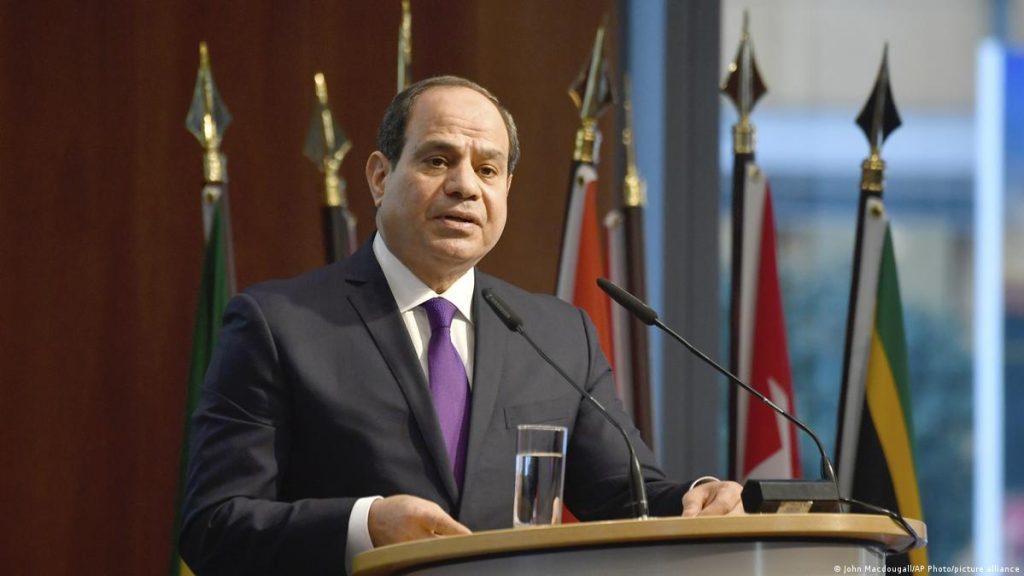
The policies pursued by Egyptian President Abdel Fattah al-Sisi since assuming power are largely based on achieving regional stability. This provides Egypt with significant opportunities to implement its development plans and rebuild the state in a way that keeps pace with global developments. Attention is also given to improving the lives of citizens, reducing unemployment, eliminating slums, and focusing on education and healthcare to raise income levels and public awareness. This has been largely achieved, especially in the last five years.
However, amidst all the progress Egypt has made, the Iranian war has cast a heavy shadow over its achievements in many areas, causing Egypt to feel concerned about current developments. This was expressed by President El-Sisi in a speech during the Armed Forces’ celebration of the 10th of Ramadan victory in 1973, when he said, “We in Egypt have tried, through sincere efforts over the past months, to avert the crisis by bridging the gap and mediating between the United States and Iran to reach an agreement, because wars always have a negative impact on the countries where they are fought or their neighbors, especially with the development of weapons.”
The President explained that “Egypt’s efforts in the Iranian crisis were sincere and informed, and that miscalculations have negative repercussions for countries. The repercussions of wars have a significant impact on the balance of power, in one way or another, not only due to the humanitarian dimension but also other dimensions. I believe there must be very careful consideration of the repercussions of war on countries and the resulting impact on the stability of the region.” He added, “In two days, very significant and rapid developments occurred. In Egypt, we were keen to emphasize the importance of de-escalation, achieving calm, and even halting the war, although I doubt that this will be achieved.”
He said that “miscalculations lead to disastrous consequences for everyone… but ‘patience has proven its success and effectiveness.'” He added that Cairo is studying all the different possibilities and scenarios regarding the potential for the war to escalate or be prolonged.
Despite this cautious stance, Egypt has explicitly and firmly declared its categorical rejection of the Iranian attacks. This sends an unspoken message that Cairo is closely monitoring the developments of the war and is dissatisfied with attempts to expand its scope or involve new parties.